5 Awesome Cloudflare Container Platform Alternatives
 Lukas Mauser
Cloudflare's Container Platform extends the company's edge network with full container support. It's a compelling proposition: deploy Docker containers on the same network that serves a significant chunk of the internet's traffic. But the platform is still new, tightly coupled to Cloudflare's ecosystem, and the pricing can get complex when you factor in Workers, R2, and other services. If you're evaluating alternatives, here are five platforms that take different approaches to container hosting:
| Platform | Pricing Model | Best For | Setup Complexity |
|---|---|---|---|
| Sliplane | Pay-per-server, predictable | Multiple services, fixed costs | Low |
| Fly.io | Usage-based, global edge | Global low-latency apps | Medium |
| Google Cloud Run | Pay-per-use, serverless | Serverless containers, Google ecosystem | Medium |
| Coolify | Self-hosted, free software | Full control, maximum savings | Medium |
| Render | Per service, free tier available | Simplicity, developer experience | Low |
1. Sliplane
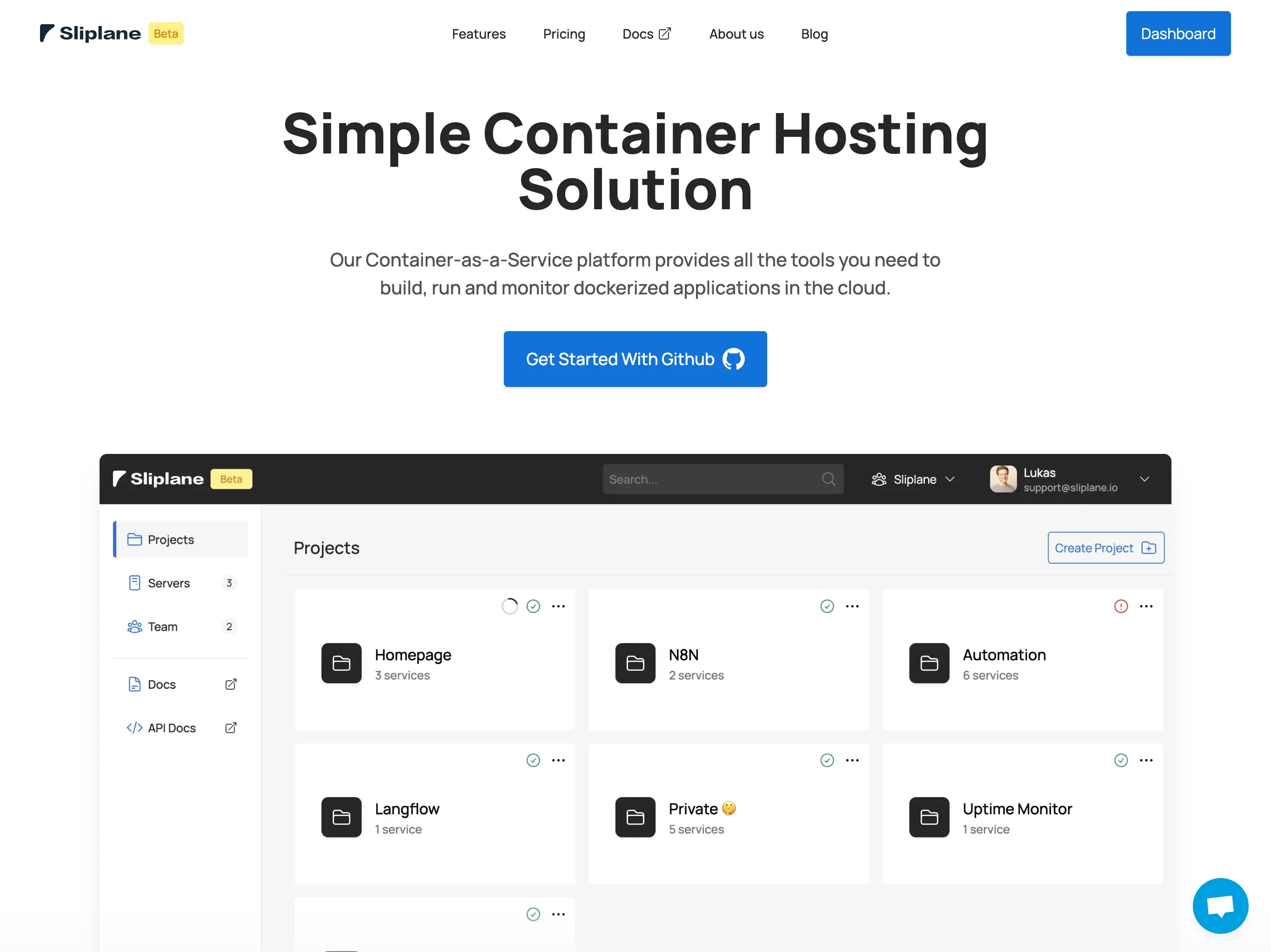
Sliplane strips container hosting down to its essence: pick a server, deploy your containers, pay a fixed monthly price. No edge network, no serverless complexity, no ecosystem lock-in. Starting at €9/month, you get a dedicated server where you can run as many containers as the hardware allows.
For most applications, you don't need your backend running at the edge. A single well-placed region with a CDN in front handles the vast majority of use cases, and Sliplane makes that setup dead simple.
Advantages over Cloudflare Container Platform:
- Dead simple pricing: one server, one price, unlimited containers
- No ecosystem lock-in or dependency on adjacent services
- Full Docker support with persistent volumes for databases
- GitHub integration with automatic deployments on push
- 2TB bandwidth included per server
- Data centers in the US, Europe, Finland, and Singapore
The trade-offs:
- No global edge deployment
- No integration with CDN or edge functions
- No scale-to-zero capability
- Smaller platform without enterprise certifications
If you don't need Cloudflare's edge network and want straightforward container hosting, Sliplane is hard to beat on simplicity and price. Put Cloudflare's free CDN tier in front of it if you need caching, and you get the best of both worlds.
2. Fly.io
Fly.io is the closest alternative if what drew you to Cloudflare Containers was global edge deployment. Fly.io runs your containers in 35+ regions worldwide, giving you low latency without depending on Cloudflare's ecosystem.
Advantages over Cloudflare Container Platform:
- 35+ deployment regions worldwide
- More mature container platform with longer track record
- Persistent volumes and built-in Postgres support
- No ecosystem lock-in with adjacent services
- Active community and extensive documentation
The downsides:
- CLI-heavy workflow with a less polished web UI
- Usage-based billing can be hard to predict
- Complex networking for multi-region setups
- Smaller network than Cloudflare's 330+ cities
Fly.io is the strongest alternative if you need global edge deployment without buying into Cloudflare's full ecosystem. It's a more focused container platform with fewer moving parts. For more comparisons, see our Fly.io alternatives post.
3. Google Cloud Run

Google Cloud Run is Google's serverless container platform. If Cloudflare Containers appeal to you because of the "deploy and forget" serverless model, Cloud Run offers a more mature version of that experience with true scale-to-zero.
Advantages over Cloudflare Container Platform:
- True scale-to-zero, pay nothing when idle
- More mature and battle-tested serverless container platform
- Deep integration with Google Cloud services
- Deploy from Console, CLI, or CI/CD, multiple workflows
- Instance-based pricing option for steady workloads
The downsides:
- No global edge network like Cloudflare's
- Google Cloud ecosystem can feel overwhelming
- Cold starts can impact latency-sensitive applications
- Vendor lock-in with Google-specific integrations
Google Cloud Run is a solid choice if you want serverless containers with proven autoscaling. The pricing can be very competitive for variable-traffic workloads. For steady traffic, a fixed-price option like Sliplane often wins on cost. See our Google Cloud Run alternatives post for more options.
4. Coolify
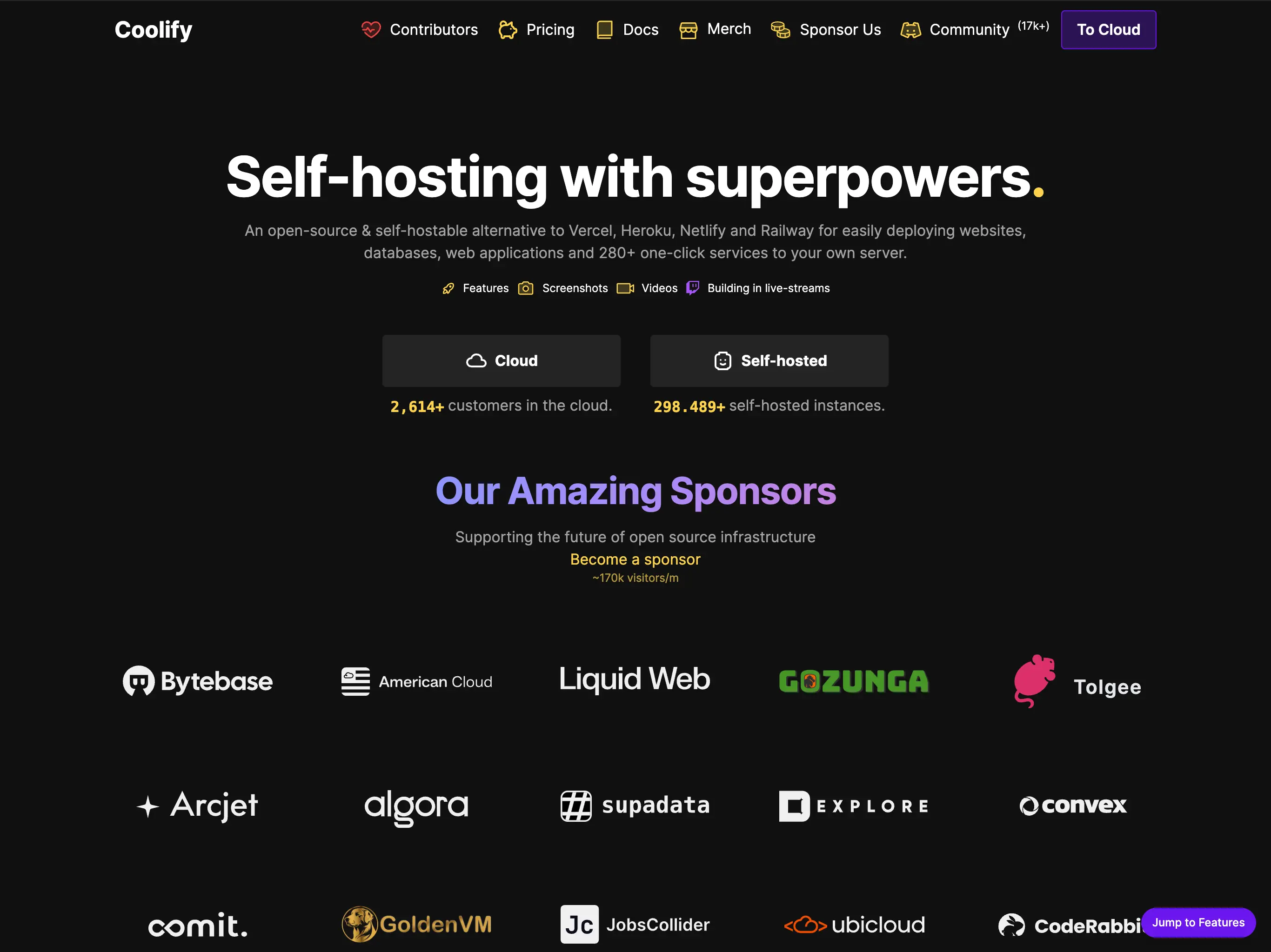
Coolify is the open-source, self-hosted alternative for teams that want maximum control. No edge network, no platform fees, just your own server running an open-source PaaS with a clean web UI.
Advantages over Cloudflare Container Platform:
- Completely free and open-source
- Zero platform fees, only pay for your server
- Full control over your infrastructure and data
- No vendor lock-in with any ecosystem
- Active community with 40k+ GitHub stars
The downsides:
- No edge deployment or CDN integration
- You handle server maintenance, security, and updates
- Requires Linux and Docker knowledge
- Community support only
Coolify is for developers who want complete control and don't mind managing infrastructure. The cost savings are dramatic: your entire stack can run on a $5-10/month VPS. For more details, check out our Coolify alternatives post.
5. Render
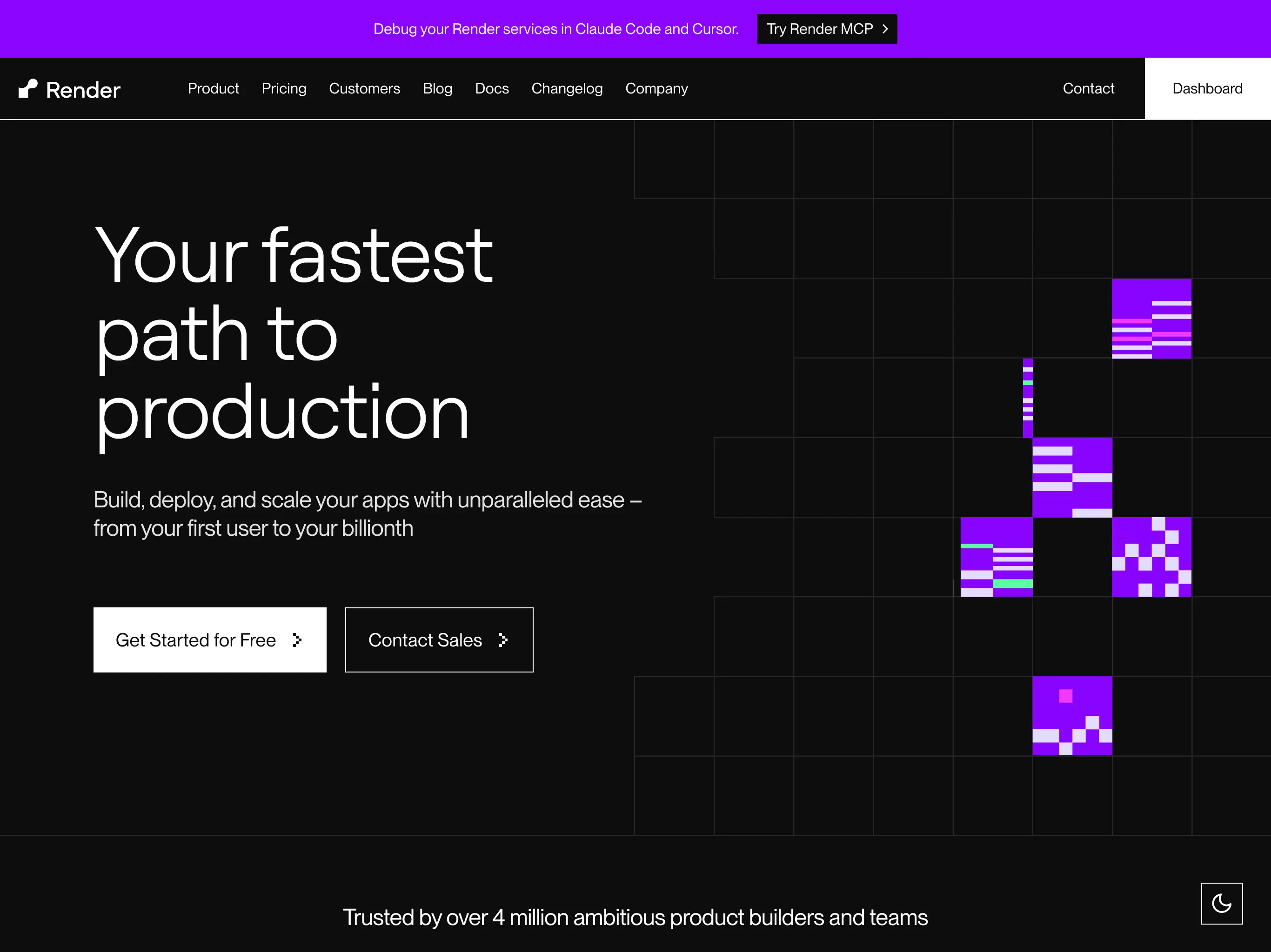
Render focuses on developer experience above everything else. No edge computing, no complex ecosystem, just a clean web UI where you connect a GitHub repo and deploy. If Cloudflare's ecosystem complexity is turning you off, Render's simplicity is refreshing.
Advantages over Cloudflare Container Platform:
- One of the best developer experiences in the industry
- Free tier for getting started
- Managed databases, cron jobs, and background workers
- Simple git-based deployments with zero configuration
- No ecosystem complexity to navigate
The downsides:
- No global edge deployment
- Gets expensive with multiple services ($7+ each)
- Cold starts on the free tier
- Fewer regions than Cloudflare or Fly.io
Render is a great fit if you prioritize simplicity and developer experience. For multi-service deployments where costs add up, consider a per-server platform like Sliplane. See our Render alternatives post for more comparisons.
Summary
Cloudflare's Container Platform brings the power of their edge network to container hosting, but the ecosystem complexity and newness of the platform aren't for everyone.
Choose Sliplane if you want simple, predictable pricing without ecosystem lock-in. Most apps don't need edge deployment, and a CDN in front handles the rest.
Go with Fly.io if global edge deployment is a requirement and you want a more mature, focused container platform.
Pick Google Cloud Run if you want true serverless with scale-to-zero and are comfortable in the Google ecosystem.
Choose Coolify if you have the technical skills to self-host and want maximum control with zero platform costs.
Pick Render if developer experience is your top priority and you want the simplest possible deployment workflow.